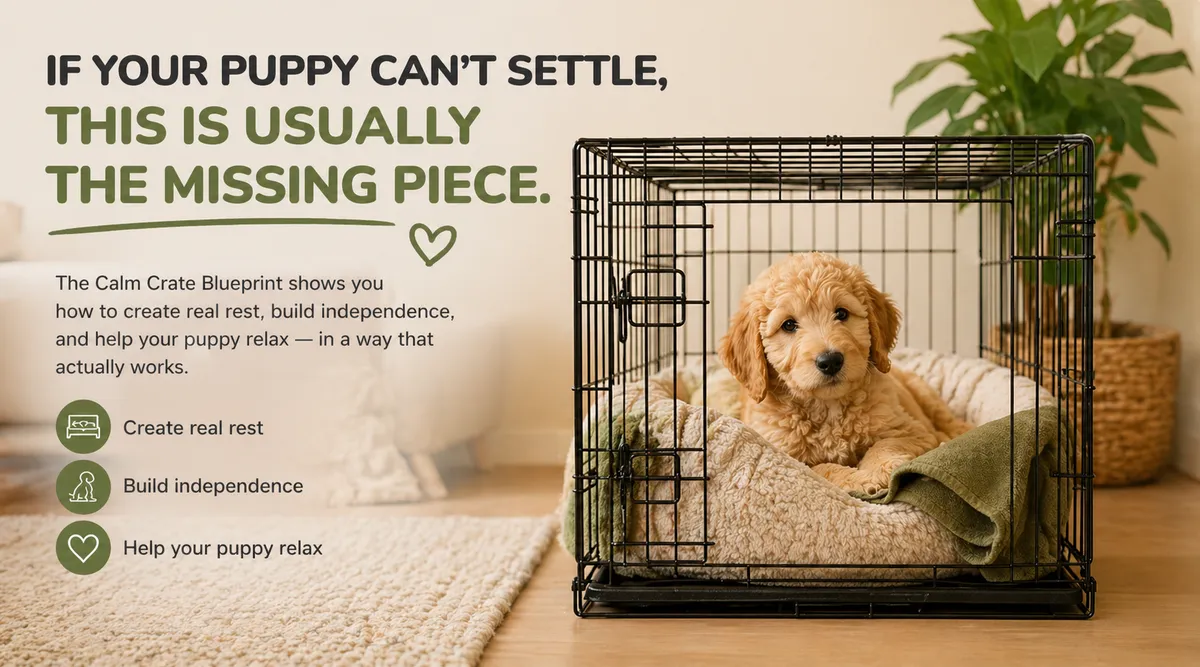
If your puppy can’t settle,
this is usually the missing piece.
The Calm Crate Path shows you how to create real rest, build independence,
and help your puppy relax — in a way that actually works.

"The biggest shift for me was understanding why my puppy was struggling — not just trying to manage the behavior.
Once I saw what was really going on underneath, everything changed and finally started to feel easier."
— Hannah, Puppy Mom to Billie
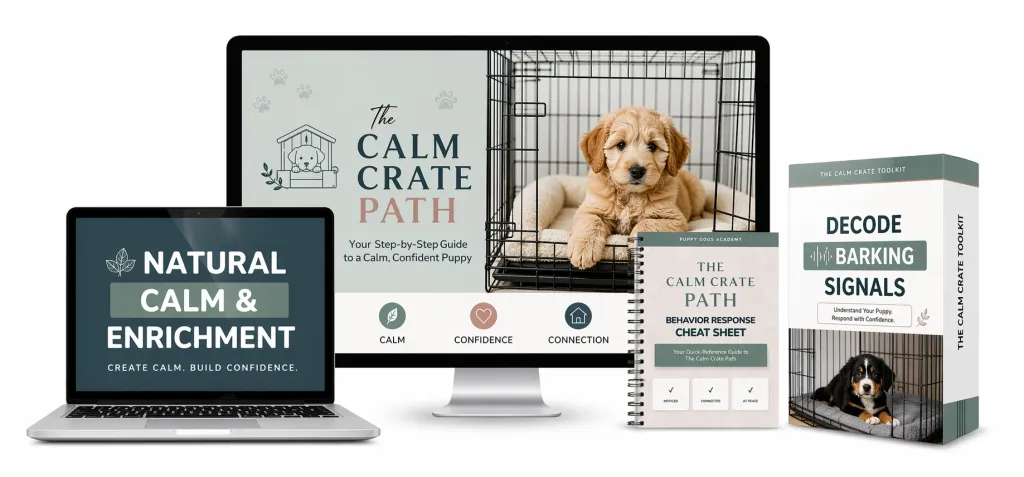
Cheat Sheets + Videos | Calm Puppy Solutions | 3 Free Bonuses
Only ($255) $67 Today
(Save $188.00 today)
Get the Calm Crate Path Now
Receive Instant Access to All 4 Modules

Availability: Instant Access
🔒100% Secure 256-Bit Encrypted Checkout
You might notice your puppy:
– can’t settle, even when tired
– follows you everywhere
– gets more and more worked up throughout the day
– struggles to switch off
And no matter how much you try to tire them out…
it doesn’t really solve it.
That’s because this isn’t an exercise problem.
It’s a settling problem.
The Calm Crate Path helps you to:
– create a setup that supports real rest
– guide your puppy into calmer states (without forcing it)
– build independence instead of constant reliance on you
So your puppy can actually relax—and everything else becomes easier.
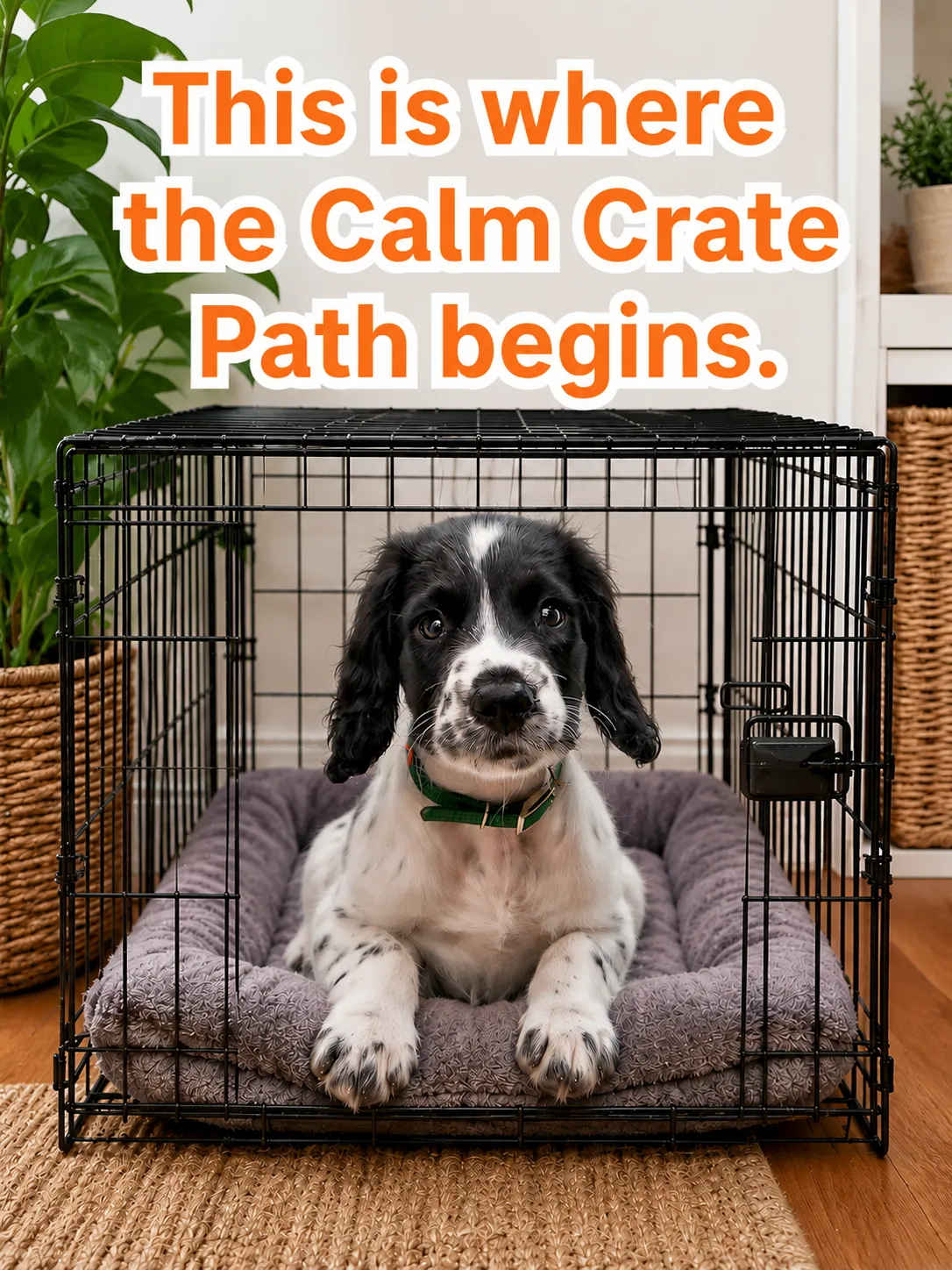
This doesn’t mean you’re doing something wrong.
It means your puppy needs a reset — not more stimulation, rules, or correction.
Total Value: $255
Your Price Today: Just $67

Is this course only for puppies that already struggle with the crate?
Not at all. The Calm Crate Path is designed both for brand new puppies and for older puppies that already dislike or struggle with the crate. Starting early helps prevent many common crate issues before they begin, but the step-by-step progression also works beautifully for puppies that need a reset.
Does this course use “cry it out” crate training?
No. The Calm Crate Path focuses on building calm, comfort, and emotional safety gradually. Your puppy is guided through small, manageable steps that help them build confidence and independence without flooding, forcing, or rushing the process.
What if my puppy whines or barks in the crate?
That’s completely normal during learning. In the course, I’ll show you how to tell the difference between mild frustration, processing, and true overwhelm — and how to respond calmly without accidentally reinforcing panic or creating dependence.
How long does crate training usually take?
Every puppy is different. Some puppies settle into the crate very quickly, while others need more repetition and smaller steps. The goal of this course is not just short-term crate success, but helping your puppy build lasting regulation, confidence, and independent rest skills that carry into everyday life.
Do I get lifetime access?
Yes! Once you purchase, the Puppy Reset System is yours forever. You can revisit the content anytime, and you'll get any future updates at no extra cost.
WHY I CREATED THIS PATH
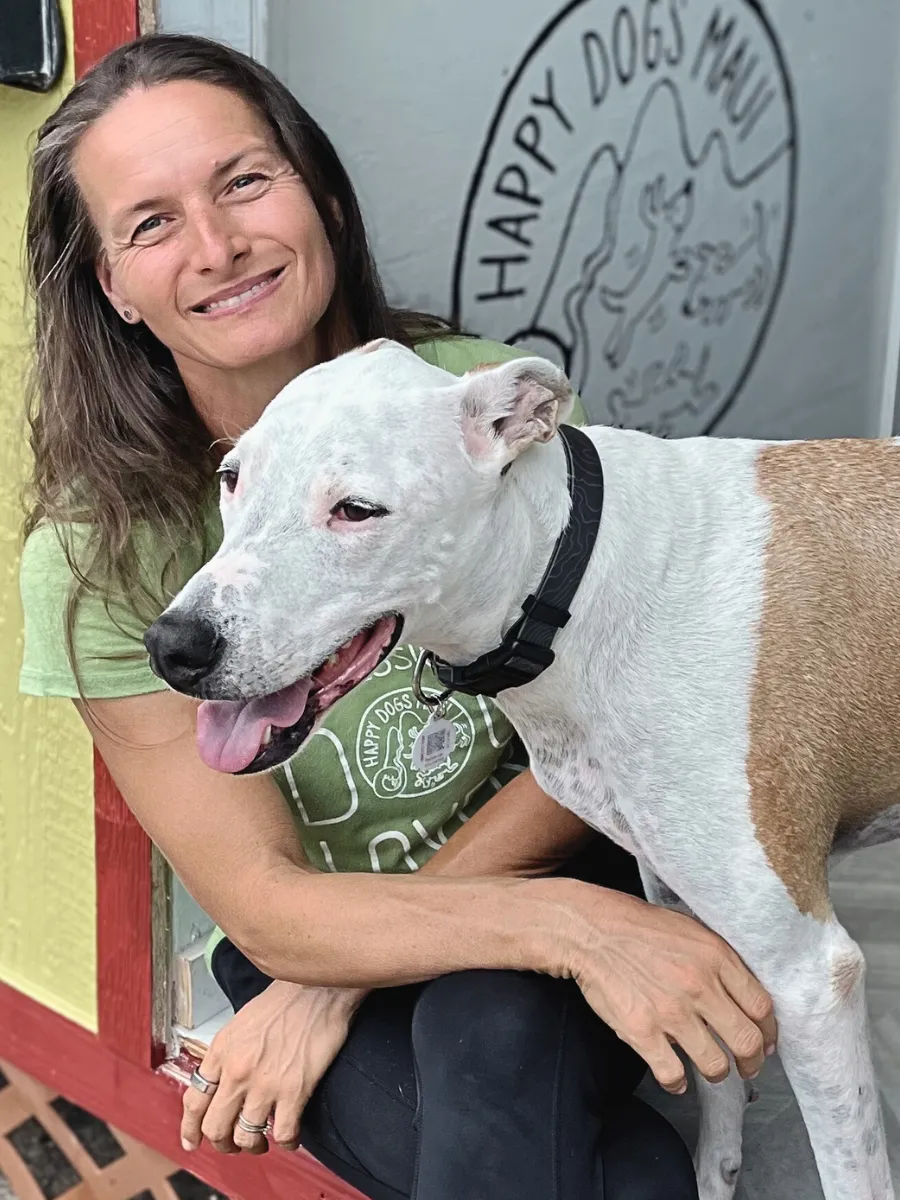
After almost a decade of working as a professional dog trainer — and supporting hundreds of puppies and their families — one pattern became impossible to ignore:
The puppies who learn to settle well early on often grow into the calmest, most balanced dogs later.
Before dog training, I spent years as a professional kiteboarder, earning nine World Championship titles in a sport where success depends on fundamentals, timing, and composure under pressure. In high-performance environments, progress doesn’t come from reacting harder when things fall apart — it comes from structure, clarity, and doing the basics exceptionally well.
I see the same pattern in crate training. Yet many puppies are introduced to the crate too quickly, with too much pressure, or without first building the calm and independence the crate actually depends on.
That’s why I created the Calm Crate Path.
A calm, step-by-step approach that helps puppies build comfort, confidence, and true rest in the crate — without overwhelm, force, or rushing the process.
Instead of simply teaching puppies to tolerate the crate, the goal is to help them learn one of the most important life skills of all: How to settle. How to rest. And how to feel safe even when nothing is happening.
No pressure. No chaos. Just a clear path you can return to — one calm step at a time.
"Calm puppies aren’t created by doing more — they’re created by understanding more."
The Calm Crate Path
A calm, step-by-step approach to crate training focused on emotional safety, regulation, and independence
Clear guidance for both brand new puppies and older puppies that already struggle with the crate
Home base setup, crate placement, and environment changes that prevent many common crate problems before they begin
Understanding overstimulation, overtiredness, and why calm starts outside of the crate first
Gentle crate games and progression exercises that build confidence without pressure or overwhelm
How to teach your puppy to settle, relax, and rest independently — even when you move around or leave the room
Real-life crate routines for naps, bedtime, visitors, workdays, and leaving the house
Guidance for whining, barking, setbacks, separation struggles, and common crate training mistakes
Printable guides including the Crate Mindset Shift Guide, Crate Setup Checklist, Calm Crate Path, and When You’re Stuck Guide
A long-term approach designed to help your puppy build confidence, emotional stability, and lifelong independence

© 2025 Kristin / Happy Dogs Academy. All Rights Reserved.
This website provides educational dog training resources and puppy behavior guidance. Kristin is a certified dog trainer with 8+ years of professional experience, but this program does not constitute professional veterinary advice, behavioral therapy, or medical diagnosis. Always consult with your veterinarian, certified animal behaviorist, or qualified pet professional before making significant decisions about your dog's health, behavior, or training, especially regarding aggression, anxiety, medical conditions, or situations that may require professional intervention.
DISCLAIMER: Results vary based on individual circumstances, puppy temperament, breed characteristics, age, health status, training consistency, household environment, and owner implementation. Individual results are not guaranteed. The tools and guidance provided are based on positive reinforcement training principles and professional dog training experience, not veterinary medicine or clinical animal behavior services. The methods and recommendations are general guidelines and may not apply to your specific puppy or situation. If you have questions about your puppy's specific behavior or health, consult with a licensed veterinarian or certified animal behaviorist.
IMPORTANT: This toolkit is designed for educational purposes to help you understand and manage common puppy behaviors better. It does not replace professional veterinary care, behavioral therapy, or specialized training services. For aggressive behavior, severe anxiety, medical concerns, or complex behavioral issues, always work with qualified professionals including veterinarians, veterinary behaviorists, or certified professional dog trainers (CPDT-KA or similar credentials).